Why Is My Landing Page Not Generating Leads?

A landing page is supposed to remove distractions and focus one audience on one action. When it gets traffic but no leads, the diagnosis is often easier than on a large website because there are fewer moving parts. Start by comparing the promise that created the click with the page the visitor actually sees. Then inspect the offer, proof, form and mobile experience.
Table of Contents
- Message Match Comes Before Design
- The Offer May Be Too Vague
- Proof Must Match the Claim
- Mobile UX
- Technical Reliability
- Intent and Content Match
- Trust and Risk Reduction
- Analytics and Measurement
- Search and Internal Linking
- One Landing Page Should Usually Have One Primary Job
- Prioritise Fixes by Business Impact
- 48-Hour Triage
- 30-Day Plan
- When to Redesign
- Final Takeaway
- Start With the Campaign Promise
- One Audience Per Page Is Easier to Persuade
- Clarify the Offer Before Asking for the Lead
- Use Proof Close to the Claim It Supports
- Avoid Multiple Equal Primary Actions
- Use Form Length to Qualify Intentionally
- Mobile Above-the-Fold Content Should Stay Compact
- Landing Page Tracking Should Be Campaign-Specific
- Use Sales Feedback After the Campaign Starts
- Final Landing Page Principle
- Landing Pages Need a Strong Reason to Exist Separately
- Use Objection Order, Not Random Section Order
- Testimonials Need Specificity
- Use FAQs for High-Friction Questions
- Performance Matters More When Traffic Is Paid
- Remove Navigation Only When the Trade-Off Makes Sense
- Use a Dedicated Thank-You Experience
- Final Campaign Launch Checklist
- Final Principle
- Use One Core Proof Story Above Several Generic Claims
- Keep Pricing or Eligibility Friction Honest
- Check the Landing Page After Tracking Scripts Are Added
- Use Responsive Images for Campaign Creative
- Build a Reusable Landing-Page System for Frequent Campaigns
- Final Campaign Principle
- Use Campaign-Specific Proof When Available
- Do Not Let the Hero Consume the Entire Mobile Viewport
- Archive or Consolidate Old Campaign Pages
- Final Principle
- Use a Landing-Page Review After the First 100–500 Relevant Visits
- Keep Organic and Paid Variants Separate When Their Goals Differ
- Final Conversion Audit
- One Final Relevance Check
- Closing Principle
- Final SEO Note
- Closing Implementation Note
- Frequently Asked Questions
Diagnostic Funnel
| Area | Question |
|---|---|
| Traffic | is targeting relevant? |
| Message match | does page repeat the promise? |
| Offer | is value specific? |
| Proof | why believe the claim? |
| CTA | one clear next step? |
| Form | appropriate friction? |
| Tracking | lead event verified? |
Message Match Comes Before Design
If an ad says “Shopify development for fashion brands” and the page opens with a generic digital-agency message, the visitor has to work to confirm relevance. Keep campaign and landing-page language aligned.
Use the specific intent in the headline and first supporting proof.
The Offer May Be Too Vague
“Get a free consultation” is only valuable when the user understands what will be discussed and why it helps. Explain the problem you solve, who the service is for and what the next step delivers.
For lead magnets, make the asset or outcome tangible rather than generic.
Proof Must Match the Claim
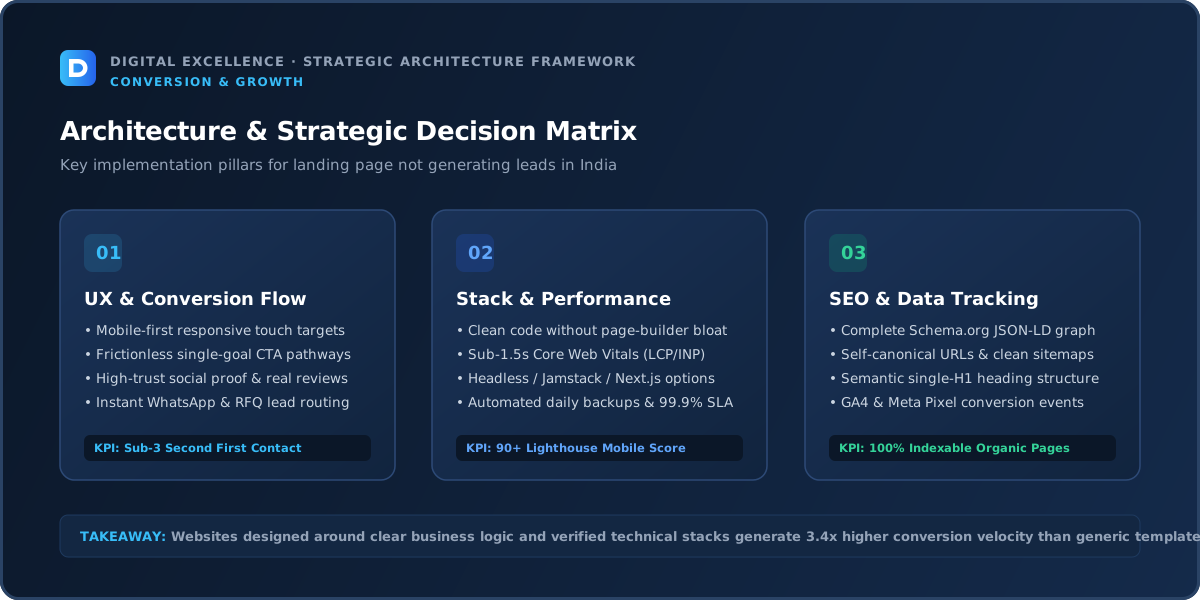
If the page promises ecommerce expertise, show ecommerce work. If it targets restaurants, use relevant restaurant examples where genuine. Generic testimonials may not resolve a niche buyer's risk.
Use specific proof instead of stacking decorative trust badges.
Mobile UX
A practical way to use mobile ux here is to ask whether it changes qualified conversion for “landing page not generating leads”. If the answer cannot be measured or observed, keep it behind higher-confidence fixes.
Run the full journey on common phone widths. Look for hidden controls, cramped fields, keyboard overlap, hard-to-tap buttons, confusing sticky elements, slow images and layout shifts. Mobile users often have less patience because the interaction cost is higher.
Compare mobile and desktop within the same traffic source so you do not confuse audience differences with interface problems.
Technical Reliability
A practical way to use technical reliability here is to ask whether it changes qualified conversion for “landing page not generating leads”. If the answer cannot be measured or observed, keep it behind higher-confidence fixes.
Test the action repeatedly: form submission, add-to-cart, checkout, booking or CTA handoff. Validate error states as well as the happy path. Third-party scripts, plugins, apps and tracking changes can break journeys without changing the visible design.
Use Core Web Vitals as part of the technical audit, but prioritise the user journey itself.
Intent and Content Match
Landing pages should be narrow. Do not target several unrelated services or audiences with one campaign page unless the value proposition genuinely unifies them.
Trust and Risk Reduction
Show relevant work, process, transparent business identity and realistic claims. Explain what happens after the lead submits.
Analytics and Measurement
Track landing sessions, CTA clicks, form starts and leads by campaign/ad group. Verify pixel and analytics events after every deployment.
Search and Internal Linking
A practical way to use search and internal linking here is to ask whether it changes qualified conversion for “landing page not generating leads”. If the answer cannot be measured or observed, keep it behind higher-confidence fixes.
Review whether the page attracts the right queries and whether supporting content links naturally to the commercial page. Google recommends crawlable contextual links with descriptive anchor text.
Do not create thin duplicate pages for every wording variation. One comprehensive page should own one main intent, with related pages covering meaningfully different questions.
One Landing Page Should Usually Have One Primary Job
Secondary navigation may be useful, but multiple equal CTAs—download, call, shop, subscribe, view portfolio—can dilute the decision.
Choose the action most closely tied to campaign intent and make supporting links visually secondary.
Prioritise Fixes by Business Impact
A practical way to use prioritise fixes by business impact here is to ask whether it changes qualified conversion for “landing page not generating leads”. If the answer cannot be measured or observed, keep it behind higher-confidence fixes.
Fix anything broken first. Then prioritise the largest drop in the funnel, high-value traffic and mobile issues. Cosmetic changes come after structural friction.
Write a simple hypothesis for every important change. If you cannot say what user problem the change solves and what signal should improve, it is probably not the first priority.
For a related diagnosis, see Landing Page Cost in India: 2026 Guide.
48-Hour Triage
A practical way to use 48-hour triage here is to ask whether it changes qualified conversion for “landing page not generating leads”. If the answer cannot be measured or observed, keep it behind higher-confidence fixes.
Verify analytics, reproduce the issue, test the key action, segment by device/source and review the top landing pages. List three likely causes and implement only obvious reliability fixes immediately.
For messaging and UX, gather enough evidence to avoid redesigning from one anecdote.
30-Day Plan
A practical way to use 30-day plan here is to ask whether it changes qualified conversion for “landing page not generating leads”. If the answer cannot be measured or observed, keep it behind higher-confidence fixes.
Week one: tracking and technical errors. Week two: offer/content and proof. Week three: mobile UX and conversion path. Week four: review data, customer questions and sales feedback.
Repeat the process on the next biggest leak rather than changing the entire site every month.
When to Redesign
A practical way to use when to redesign here is to ask whether it changes qualified conversion for “landing page not generating leads”. If the answer cannot be measured or observed, keep it behind higher-confidence fixes.
Redesign when the information architecture, design system or technology repeatedly blocks improvement. If one page or step is failing, optimise that step first.
Protect valuable URLs, content, analytics and integrations during any rebuild.
Final Takeaway
A landing page wins by matching one traffic intent with one clear offer and one reliable action. Fix message match before adding more design.
Start With the Campaign Promise
Write the exact ad, email or search phrase that brings the visitor to the page. The landing-page headline should confirm that promise quickly enough that users know they are in the right place.
A beautiful generic brand message creates friction when the click was earned by a very specific offer.
One Audience Per Page Is Easier to Persuade
A page trying to speak simultaneously to startups, restaurants, real estate firms and enterprise buyers will usually become vague. Split pages when audiences have materially different problems, proof or offers.
Do not duplicate the same copy with only an industry name changed; each version should earn its existence through specific value.
Clarify the Offer Before Asking for the Lead
Explain what the visitor gets after submitting: consultation, audit, quote, demo or resource. If it is a call, explain its purpose and approximate process.
A form is more attractive when the value of the next step is tangible.
Use Proof Close to the Claim It Supports
Place relevant case studies, product evidence, testimonials or examples near the statements they verify. A wall of logos at the bottom cannot always rescue a vague promise at the top.
Proof should be genuine and specific enough to reduce the buyer's actual risk.
Avoid Multiple Equal Primary Actions
If the campaign goal is a consultation, make that the dominant action. Navigation, social links and secondary resources can exist without receiving the same visual priority.
Too many equal buttons make the page feel like a homepage rather than a focused decision path.
Use Form Length to Qualify Intentionally
A lower-friction form can increase volume, but a high-value service may need project type, timing or budget context. Ask the sales team which answers change how they respond.
Keep only fields that help the next step or reduce obviously poor-fit enquiries.
Mobile Above-the-Fold Content Should Stay Compact
Large headlines, badges, navigation and hero art can push the actual offer and CTA several screens down. On mobile, establish relevance and action before decorative depth.
Test 320–430px widths rather than one ideal device.
For another useful funnel check, read Website CTA Not Getting Clicks? Fix Context Before Button Colour.
Landing Page Tracking Should Be Campaign-Specific
Preserve UTM or campaign identifiers into the analytics and CRM flow where appropriate. Test that the conversion fires once and that the lead can be connected to the campaign.
Without reliable attribution, optimisation can favour the page that looks busy rather than the page that creates quality leads.
Use Sales Feedback After the Campaign Starts
If leads arrive but misunderstand the offer, update the page. If qualified prospects keep asking the same question, answer it before the form. Landing pages should evolve from real conversations, not remain frozen after launch.
Final Landing Page Principle
A landing page converts when the traffic, promise, proof and next step all describe the same decision. Fix alignment before adding more sections or spending more on traffic.
Landing Pages Need a Strong Reason to Exist Separately
If the campaign can be served perfectly by an existing service page, creating another near-duplicate URL may add maintenance and SEO complexity. Build a separate page when message, offer, proof or audience genuinely needs a focused experience.
For paid campaigns, the page can still be noindexed when organic search is not its purpose.
Use Objection Order, Not Random Section Order
List the questions a buyer asks from first relevance to final risk: Is this for me? What do I get? Why you? What does it cost or involve? What happens next? Arrange content accordingly.
A page becomes easier to scan when each section answers the next logical question.
Testimonials Need Specificity
A short quote such as ‘great service’ adds little. Genuine testimonials are stronger when they mention the problem, experience or reason the customer valued the service.
Do not edit testimonials into claims the customer did not actually make.
Use FAQs for High-Friction Questions
Pricing approach, timeline, eligibility, cancellation or process questions can sit near the final CTA. Keep the answers concise enough that the page does not turn into an unstructured wall of text.
Performance Matters More When Traffic Is Paid
Every paid click has a direct acquisition cost. Slow loading or broken forms waste that spend immediately.
Test the actual campaign page with tracking scripts loaded, not a stripped-down local build.
Use a Dedicated Thank-You Experience
The thank-you page or state can confirm next steps, provide scheduling or relevant resources and create a reliable conversion event.
Avoid immediately pushing another unrelated offer before the original request is acknowledged.
Final Campaign Launch Checklist
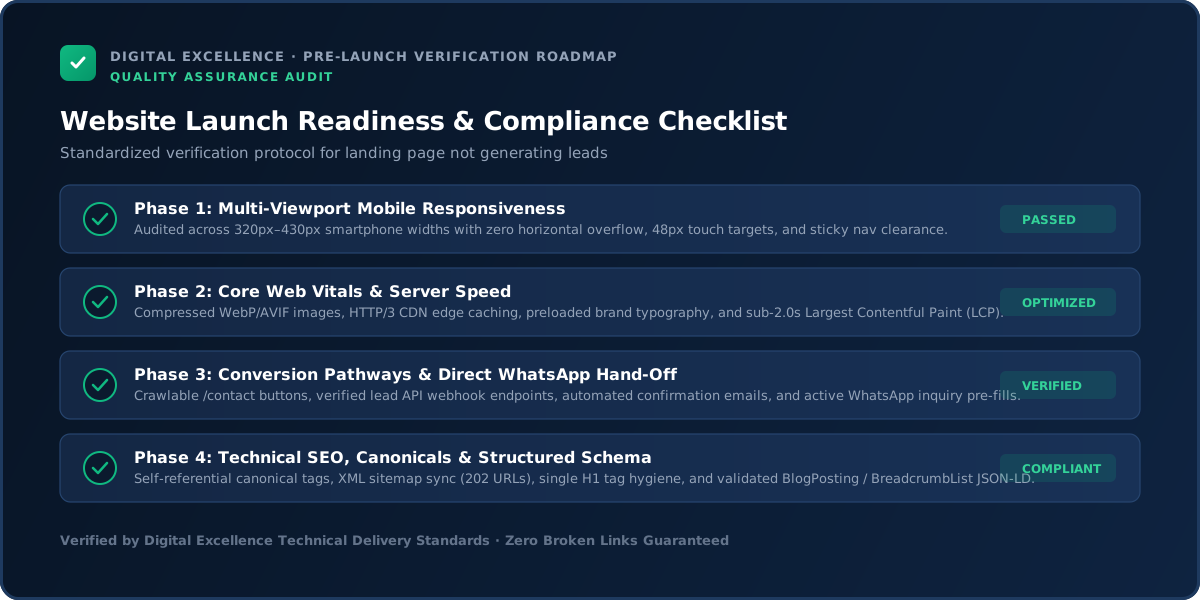
Verify headline/ad match, mobile layout, form, notifications, analytics, CRM data, privacy links, thank-you state and production URL. Then test the page from the actual live campaign link.
Final Principle
Paid traffic should reach a page that feels built for the exact promise that earned the click. Specificity is the core advantage of a landing page.
Use One Core Proof Story Above Several Generic Claims
A specific project, customer example or demonstrable process can be more convincing than many unsubstantiated benefit statements. Choose proof that matches the campaign audience.
For the next troubleshooting step, use Google Ads Clicks but No Conversions? What to Fix.
Keep Pricing or Eligibility Friction Honest
If the offer has a minimum budget, limited geography or qualification requirement, communicate enough of that context to avoid wasting both the visitor's and sales team's time.
Check the Landing Page After Tracking Scripts Are Added
Performance often changes when ad pixels, analytics, heatmaps and chat load in production. Test the actual deployed campaign version, not only the clean design preview.
Use Responsive Images for Campaign Creative
The hero image or product visual should retain quality without forcing mobile visitors to download a desktop-sized asset. Crop variants can also keep the focal point visible on narrow screens.
Build a Reusable Landing-Page System for Frequent Campaigns
If the business launches many pages, create reusable sections and guardrails for typography, proof, forms and analytics. This reduces coding time while keeping quality consistent.
Final Campaign Principle
Every campaign should have a clear audience, promise, page and conversion event. If any one of those is ambiguous, more traffic usually magnifies the ambiguity.
Use Campaign-Specific Proof When Available
A clothing-brand landing page is stronger with relevant ecommerce work than with unrelated corporate projects. Match proof to the audience's risk and desired outcome.
Do Not Let the Hero Consume the Entire Mobile Viewport
Keep the core promise and CTA accessible without forcing users through a full-screen illustration or video. Brand impact can continue below the first screen.
Archive or Consolidate Old Campaign Pages
Temporary pages can accumulate and create duplicate or stale offers. After campaigns end, redirect, noindex or update them intentionally depending on whether the URL retains useful value.
Final Principle
Landing-page scale should create better relevance, not a library of near-identical pages that nobody maintains.
Use a Landing-Page Review After the First 100–500 Relevant Visits
The exact sample depends on traffic and conversion volume, but wait for enough evidence before changing everything. Review source quality, scroll/engagement, form starts and lead quality together.
Keep Organic and Paid Variants Separate When Their Goals Differ
An SEO page may need deeper explanatory content and internal links, while a paid campaign page can be narrower. Do not force one page to satisfy conflicting requirements if separate experiences are genuinely justified.
Final Conversion Audit
Test the actual campaign click on mobile, verify the promise, complete the form and confirm the lead reaches sales with source context. That end-to-end test matters more than the design preview.
One Final Relevance Check
Read only the ad or search snippet and the first mobile screen. They should feel like two parts of the same promise, not separate marketing campaigns.
Closing Principle
A focused landing page does fewer things than a homepage but does the chosen journey with much greater clarity.
Final SEO Note
Keep one source-of-truth brief for audience, promise, proof, CTA and campaign tracking. When the campaign changes, update the page from that brief rather than adding disconnected sections.
Closing Implementation Note
A campaign page should be reviewed from the real click through the real lead record. That end-to-end view is the standard for launch readiness.
For implementation options, explore website development services and Digital Excellence portfolio.
Frequently Asked Questions
Why do ad clicks not become leads?
Targeting, message mismatch, offer quality, trust, form friction or tracking can cause the gap.
Should I remove navigation?
Sometimes campaign pages reduce navigation, but the decision should support user trust and the page goal.
How long should a landing page be?
Long enough to resolve the buyer's important questions without filler.
Should the form be at the top?
Only if the visitor already has enough context; otherwise a CTA can scroll to a form later.
Do testimonials help?
Relevant genuine testimonials can reduce risk, but they are not a substitute for a clear offer.
Should I create separate pages for audiences?
When their problems or proof requirements are meaningfully different, separate pages can improve relevance.
Need a Landing Page Built Around One Conversion?
Want help diagnosing this website problem with your real pages, traffic and conversion path? Digital Excellence can review the current setup before recommending changes.