Website AMC Cost in India: What Should Businesses Pay?

An annual maintenance contract can make website support predictable, but AMC proposals often bundle very different things under one yearly number. One contract may cover updates and backups only. Another may include monthly content changes, development hours, monitoring and priority support. That is why comparing website AMC cost in India requires more than dividing the annual fee by twelve. The useful comparison is what work, response time and risk coverage you are buying.
Table of Contents
- What an Annual Maintenance Contract Is Supposed to Solve
- AMC Scope: The Most Important Part of the Price
- Response Time vs Resolution Time
- What a Professional Scope Should Include
- Mobile Readability and User Experience
- SEO Foundations and Search Intent
- Performance and Technical Quality
- Hidden and Recurring Costs
- Ownership and Handover
- How to Compare Quotes
- Common Mistakes to Avoid
- A Practical Decision Framework
- Pre-Purchase Checklist
- Final Takeaway
- An AMC Should Define Capacity, Not Just a Promise of Availability
- Create Severity Levels for Support Requests
- AMC Renewal Should Be Based on Actual Usage
- What to Include in the Handover if the AMC Ends
- Security Responsibilities Need Clear Boundaries
- Annual Maintenance Cost Should Be Compared With Downtime Risk
- A Practical AMC Review Checklist
- AMC Pricing Should Reflect the Number of Systems Being Supported
- Define Maintenance Windows and Release Process
- Keep an Incident History
- Avoid Paying for Activity That Creates No Risk Reduction
- Use AMC Data to Plan the Next Website Budget
- Use Service Credits and Penalties Carefully
- The Best AMC Is Easy to Audit
- AMC Cost Should Be Re-Evaluated After Major Website Changes
- Frequently Asked Questions
Common AMC Levels
| AMC type | Broad annual band | Typical scope |
|---|---|---|
| Basic care | ₹12k–₹40k | updates, backups, uptime |
| Business support | ₹40k–₹1L | care + content/fixes |
| Priority/growth AMC | ₹1L–₹3L+ | development capacity, faster SLA |
| Custom app support | project-specific | monitoring, releases, incidents |
What an Annual Maintenance Contract Is Supposed to Solve
An AMC creates a defined support relationship after launch. The business knows who is responsible for routine care and the provider can plan capacity.
It is most valuable when the site changes regularly or downtime would create real business impact. It is less valuable when the site is static and a few ad-hoc updates per year are enough.
AMC Scope: The Most Important Part of the Price
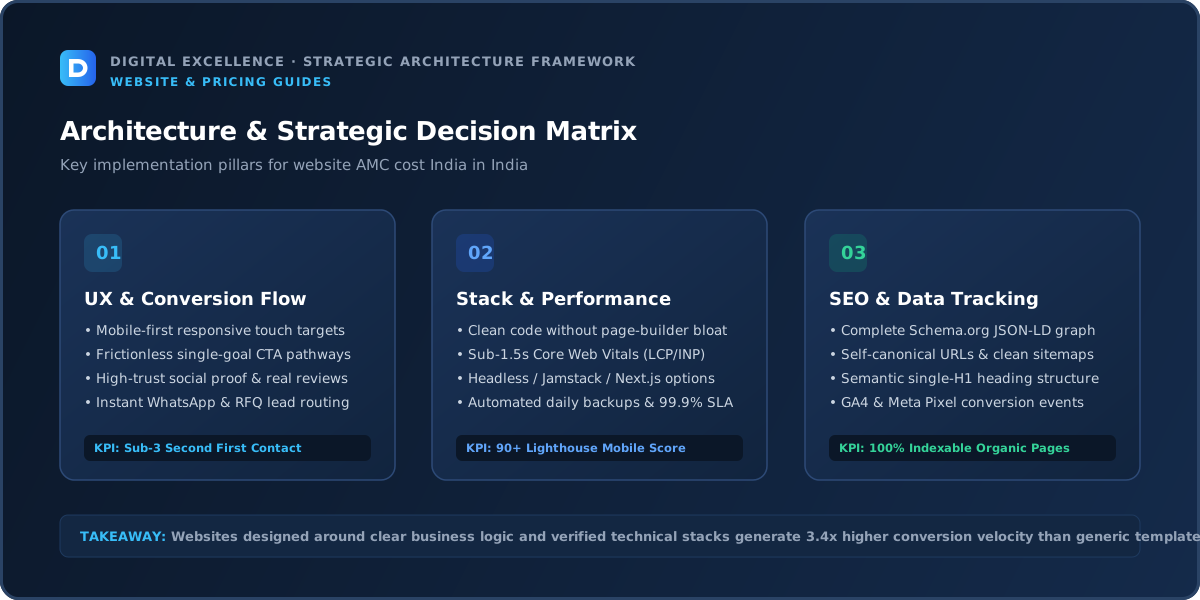
Read the list of included activities and limits. How many content updates? How many development hours? Are plugin updates tested? Are backups monitored? What counts as a bug? What is the response time for a critical issue?
A cheaper AMC with a narrow scope can be perfectly suitable. A more expensive plan is justified only when the additional coverage matches real needs.
Response Time vs Resolution Time
An SLA can promise that someone acknowledges an issue quickly without guaranteeing immediate resolution. Complex bugs may require investigation or third-party support.
Ask the provider to distinguish acknowledgement, first response and target resolution. For revenue-critical websites, escalation paths are more important than impressive-sounding “24/7 support” language.
What a Professional Scope Should Include
A clear scope should identify the deliverable, mobile behaviour, content responsibilities, integrations, analytics, SEO foundations, testing and post-launch ownership. For a website AMC, this also means update schedule, backup retention, uptime monitoring, included hours or tasks, response levels, emergency procedure, reporting and renewal terms.
Avoid proposals that use broad labels without explaining what will actually be done. “Optimised,” “custom,” “secure” and “SEO-ready” should translate into visible tasks and acceptance criteria. A written scope protects both sides because ordinary feedback can be separated from genuinely new requirements.
Mobile Readability and User Experience
For “Website AMC Cost in India: What Should Businesses Pay?”, use mobile readability and user experience to compare the real scope, responsibility and long-term ownership behind each proposal instead of treating it as a standard line item.
Mobile usability should be planned before launch rather than fixed after complaints arrive. Check navigation, tap targets, heading size, forms, tables, images, sticky CTAs and long-form text at common phone widths. A site can pass a basic responsive check and still be unpleasant to use.
Google recommends an overall good page experience, including mobile-friendly content and good Core Web Vitals. For buyers, the practical question is simpler: can a real customer understand the page quickly and complete the intended action without fighting the interface?
SEO Foundations and Search Intent
The page should have one clear search intent, a descriptive title, logical headings, clean canonical URL, crawlable internal links and sitemap coverage. Structured data such as Article or BreadcrumbList should be added where appropriate.
If a website AMC is being bought specifically to improve search performance, clarify which work is technical setup and which work is ongoing SEO. Development can remove technical barriers, but rankings also depend on content quality, competition, authority and time.
Performance and Technical Quality
For “Website AMC Cost in India: What Should Businesses Pay?”, use performance and technical quality to compare the real scope, responsibility and long-term ownership behind each proposal instead of treating it as a standard line item.
Image handling, third-party scripts, plugins, apps and animation choices all affect performance. Ask how the provider will control asset size, layout shift and unnecessary JavaScript.
Core Web Vitals are useful diagnostics for loading, responsiveness and visual stability. They should inform the build, but do not buy a project only because a proposal promises a perfect score. Real-world usability and maintainability matter more than one lab screenshot.
Ownership and Handover
An AMC should not require surrendering account control. The client should retain access to the domain, hosting or deployment, CMS, analytics and source or repository where appropriate.
Good handover includes the accounts and documentation needed to operate the asset. If another competent developer cannot take over without rebuilding everything, the low initial price may create a high switching cost later.
How to Compare Quotes
For “Website AMC Cost in India: What Should Businesses Pay?”, use how to compare quotes to compare the real scope, responsibility and long-term ownership behind each proposal instead of treating it as a standard line item.
Create a simple matrix: scope, mobile work, SEO, content, integrations, QA, timeline, revisions, ownership, support and recurring costs. Mark anything that is not specified instead of treating it as included.
Then compare the provider's relevant live work and the quality of their discovery questions. A strong quote explains assumptions and trade-offs; it does not simply attach a price to a page count.
Common Mistakes to Avoid
Common mistakes include buying annual support without task limits, assuming every future feature is included, ignoring SLA definitions and auto-renewing a plan that no longer matches the website's activity.
Another common mistake is buying more complexity than the business can operate. A smaller, focused implementation with strong foundations is normally better than an overloaded first version that becomes difficult to maintain.
A Practical Decision Framework
Choose AMC when predictable support and accountability are worth more than ad-hoc billing. For a low-change site, periodic maintenance may be cheaper. For active ecommerce or custom systems, a structured support contract can reduce operational risk.
Write the decision in plain language: what outcome is required, what features are genuinely necessary, which risks matter and what the business must own after launch. If you cannot explain why a feature is in the scope, consider moving it to a later phase.
Pre-Purchase Checklist
For “Website AMC Cost in India: What Should Businesses Pay?”, use pre-purchase checklist to compare the real scope, responsibility and long-term ownership behind each proposal instead of treating it as a standard line item.
Before approving the project, confirm the primary goal, audience, scope, platform, content owner, mobile requirements, integrations, SEO work, analytics, testing, timeline, payment milestones, recurring costs, access, maintenance and handover.
This checklist is intentionally boring. Most expensive website problems come from boring details that nobody clarified before development began.
Final Takeaway
AMC value comes from predictable responsibility. Compare service levels and scope before comparing the annual number.
Publish the article as a decision resource, not a sales page disguised as advice. The strongest long-term SEO value comes from useful specificity, clean internal linking, strong mobile reading experience and periodic updates based on real search and customer questions.
For implementation options, explore website development services and Digital Excellence portfolio.
An AMC Should Define Capacity, Not Just a Promise of Availability
Some annual contracts include a fixed number of development hours or tasks; others cover only routine care. Ask how work is prioritised when several requests arrive together and whether unused capacity carries forward.
This prevents a common mismatch where the client expects constant development while the provider priced only for monitoring and updates.
Create Severity Levels for Support Requests
Define examples of critical, high, normal and low-priority issues. A payment failure or website outage may require rapid attention, while a design tweak can wait for the regular maintenance queue.
Severity definitions make response-time promises more meaningful and help both sides avoid treating every request as an emergency.
For a useful scope comparison, read Website Development Contract Checklist for Business Owners.
AMC Renewal Should Be Based on Actual Usage
Before renewing, review how many incidents occurred, how much development capacity was used, which recurring tasks were valuable and whether the technology stack changed.
A website that became stable may need a smaller plan. A business that added ecommerce or frequent campaigns may need more support. Renewal should reflect reality rather than automatically repeating the first contract.
What to Include in the Handover if the AMC Ends
The provider should leave account access, current backups, documentation of major changes, plugin/app or infrastructure details and any open issues that another developer needs to know.
A clean exit protects both parties and demonstrates that the maintenance service was designed around the client's continuity rather than lock-in.
Security Responsibilities Need Clear Boundaries
Website security depends on hosting, platform, passwords, third-party software and user behaviour. An AMC should state which layers the provider manages and which remain the client's or hosting company's responsibility.
Avoid vague promises that imply absolute security. The useful goal is reducing known risk and having a response process when an issue occurs.
Annual Maintenance Cost Should Be Compared With Downtime Risk
For a low-traffic informational site, expensive priority support may not be justified. For a store or lead engine where downtime immediately costs business, faster support and monitoring can have real economic value.
Choose the service level from the cost of failure, not from the largest package available.
A Practical AMC Review Checklist
At renewal, confirm contact persons, account access, backup status, response terms, included tasks, third-party renewals, open technical debt and next year's expected changes. This small review keeps the agreement aligned with the current website rather than the site that existed twelve months ago.
AMC Pricing Should Reflect the Number of Systems Being Supported
A WordPress site with hosting, forms and a few plugins is different from a commerce stack with payment gateways, email, CRM, analytics and several external services. More systems create more potential failure points and coordination work.
Ask whether the AMC covers only the website application or also the integrations around it.
Define Maintenance Windows and Release Process
For important sites, agree when routine updates happen, whether a staging environment is used and how major changes are approved. This reduces the chance that a routine plugin or dependency update disrupts the business during a campaign or peak period.
For the next planning step, use Website Redesign Pricing in India : What Changes the Quote?.
Keep an Incident History
Record significant outages or bugs, their cause and how they were resolved. Over time this shows whether recurring problems come from one plugin, hosting limitation or brittle integration.
Incident history helps decide whether the next year's budget should go toward support, infrastructure or a targeted rebuild.
Avoid Paying for Activity That Creates No Risk Reduction
An AMC should not become a monthly checklist performed only to justify the invoice. Ask what was updated, tested, monitored or improved and why it mattered.
Some months will be quiet. That is fine when the agreement provides readiness and accountability, but the value should still be understandable.
Use AMC Data to Plan the Next Website Budget
Support tickets reveal where the website creates ongoing cost. If editors constantly need developer help, improve CMS usability. If the same integration fails, replace or redesign it. If traffic spikes require emergency hosting changes, plan infrastructure capacity.
Maintenance history should inform future development priorities.
Use Service Credits and Penalties Carefully
Some larger contracts include service credits for missed response commitments. These can create accountability, but they do not replace a competent support process. The most important questions are still who receives the alert, who has production access and how incidents are communicated.
For small businesses, simple written response targets are often sufficient. For critical platforms, a more formal SLA may be appropriate.
The Best AMC Is Easy to Audit
At any point, the client should be able to see what the contract covers, which recurring tasks were completed, what incidents occurred and how much change capacity remains. This does not require complex software; a simple monthly record is enough.
Transparency helps both sides adjust the plan before expectations drift.
AMC Cost Should Be Re-Evaluated After Major Website Changes
A site that adds ecommerce, a client portal or multiple marketing integrations has a different support profile from the original brochure site. Update the AMC scope after major launches so response expectations and responsibilities still match the system being supported.
Likewise, remove coverage that is no longer useful. An annual contract should evolve with the website instead of becoming a legacy subscription.
Frequently Asked Questions
What is website AMC?
An annual maintenance contract defines ongoing website care and support for a fixed period.
How much does website AMC cost in India?
Basic plans may be in the tens of thousands of rupees per year; active or custom support can cost substantially more.
Does AMC include redesign?
Usually not unless explicitly stated. A redesign is typically a separate project.
Should hosting be included?
It can be, but the hosting plan and ownership should be clear.
What is an SLA?
A service-level agreement defines response or service expectations for different types of issues.
Can I cancel an AMC?
That depends on the contract. Review renewal, cancellation and unused-service terms before signing.
Need a Clear Website AMC Scope?
Need a website scope or quote based on your real requirements rather than a generic package? Digital Excellence can review the pages, platform, integrations, SEO needs and launch priorities.