Website Development Cost for Coaches in India

A coaching website should be designed around the way customers make a decision in this category. That means the project is not simply “pages plus a contact form.” It may need personal positioning, program pages, consultation booking, testimonials, content, email capture and optional payments. Because those requirements differ, website development for coaches India depends on design depth, content, platform, integrations, data and the amount of work needed to make the site usable on mobile. This guide breaks the budget into practical workstreams instead of giving one unrealistic universal number.
Table of Contents
- What a Coaching Website Actually Needs
- Information Architecture and Content
- Mobile-First User Journey
- Trust and Proof
- Conversion Path
- Integrations and Operations
- SEO Opportunities
- Performance and Core Web Vitals
- Analytics and Measurement
- Hidden and Recurring Costs
- How to Reduce Cost Without Weakening Quality
- What to Ask Before Hiring a Developer
- Final Takeaway
- Map the Coaching Customer Journey
- Create a Structured Data and Content Model
- Separate Design From Content Production
- Design the Mobile Priority Order
- Build Trust Into the Relevant Page
- Define Operational Integrations Early
- Build an SEO Architecture From Real Search Intent
- Use Useful Editorial Content as Support, Not Filler
- Plan Performance Before Media and Widgets Accumulate
- Define Analytics Around the Business Outcome
- Create a Total Cost of Ownership View
- Final Development Principle
- Create a Content Ownership Process
- Build Reusable Components for Recurring Updates
- Plan Confirmation and Follow-Up States
- Create a Launch QA Matrix
- Review Accessibility Basics
- Use Post-Launch Data to Prioritise Phase Two
- Final Cost Principle
- Use Real Business Data in Design Decisions
- Create a Change-Safe CMS
- Plan for Seasonal or Campaign Variations
- Review Integration Failure Modes
- Final Pre-Launch Buyer Test
- Post-Launch SEO & Conversion Note
- Frequently Asked Questions
Coaching Website Planning Bands
| Level | Broad planning band | Typical scope |
|---|---|---|
| Focused site | ₹30,000–₹70,000 | core pages and primary conversion |
| Growth site | ₹70,000–₹1,80,000 | stronger UX, content, SEO, integrations |
| Advanced build | ₹1,80,000–₹4,00,000+ | course/membership, payment, automation or custom client portal workflows |
What a Coaching Website Actually Needs
A coaching website sells expertise and fit. Visitors often need to understand the coach's point of view, who the program is for, the process and what a first conversation involves.
Information Architecture and Content
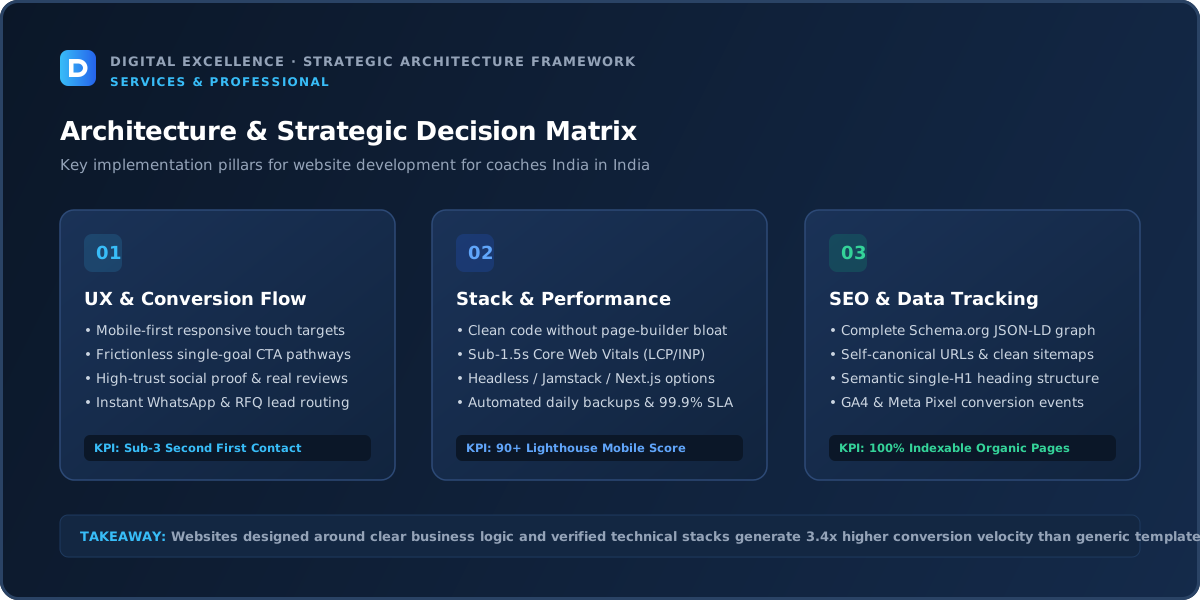
Use clear pages for coaching offers, audience/problems, about/founder perspective, proof, FAQs and resources. Avoid vague motivational copy that never explains the service.
Create separate pages only where the user need is genuinely different. The goal is not to inflate page count; it is to make important decisions easy to navigate and to give search engines clear, useful destinations.
Mobile-First User Journey
Social and podcast audiences frequently arrive on mobile. Make program detail, proof and booking easy to consume without enormous personal-brand hero sections.
Test the highest-value action at common phone widths. A responsive layout is not enough if users have to zoom, fight sticky elements or scroll through oversized decorative sections before reaching what they need.
Trust and Proof
Use genuine credentials and testimonials where available, clear scope and realistic claims. Avoid guaranteed income, health or life outcomes.
Use factual evidence and genuine assets. Avoid unsupported “best,” “#1” or guaranteed-results claims. In trust-sensitive industries, accuracy and transparency matter more than decorative badges.
Conversion Path
Primary action is often consultation booking or application. Explain the process and who the offer is suitable for.
The primary CTA should reflect the natural next step in this industry. Explain what happens after the click so users understand the commitment.
Integrations and Operations
Calendars, email marketing, payment, course platforms, CRM and webinar tools may affect scope.
Map these systems before development. Integrations discovered at the end can change architecture, timeline and testing requirements.
SEO Opportunities
Buyer-intent topics can include cost, choosing a coach, program type and specific problems when the content is genuinely useful. Personal-brand searches also need consistent entity information.
Use descriptive URLs, one H1, unique metadata, contextual internal links and a clean sitemap. Google recommends people-first content and crawlable links. Do not build thin location or industry pages merely by swapping names.
Performance and Core Web Vitals
When evaluating “website development for coaches India”, this performance and core web vitals point should be tied to a written deliverable, owner or test so two quotes can be compared on the same basis.
Optimise images, fonts, scripts and third-party tools. Test representative pages on mobile and use Core Web Vitals to identify loading, responsiveness and layout-stability issues.
Performance is especially important when the site relies on rich galleries, maps, booking widgets, property listings or ecommerce media.
Analytics and Measurement
Track consultation bookings, applications, email leads and qualified sales outcomes.
Choose a small number of meaningful events rather than tracking every interaction. Measurement should help marketing and sales decide what to improve next.
For a related buying decision, see Coaching Website Not Getting Calls? What to Fix.
How to Reduce Cost Without Weakening Quality
When evaluating “website development for coaches India”, this how to reduce cost without weakening quality point should be tied to a written deliverable, owner or test so two quotes can be compared on the same basis.
Prepare content, brand assets and data early. Use proven platform features where they fit. Prioritise launch-critical pages and workflows, then move secondary features to phase two.
Do not save money by removing mobile QA, account ownership, backups, basic SEO hygiene or testing of the primary conversion.
What to Ask Before Hiring a Developer
Ask for live work relevant to coaching, the proposed platform and why, content responsibilities, mobile QA, integrations, SEO scope, ownership, support and recurring software.
Then ask how they would handle consultation booking, personal-brand trust, program positioning and email/CRM integration. The answer should discuss the business journey, not only code.
Final Takeaway
The best coaching website budget pays for the decisions customers need to make and the systems the business needs to operate. Start with the customer journey, then choose the simplest architecture that supports it.
Map the Coaching Customer Journey
A coaching website should be planned around how people evaluate coach fit, program scope, format, process, proof, pricing context and consultation expectations. Map discovery, evaluation, action and post-action stages before choosing templates.
This journey determines which content deserves its own page, which information should appear early on mobile and which integrations are truly necessary.
Create a Structured Data and Content Model
Define reusable fields for program audience, format, duration, process, outcomes not guaranteed and coach credentials where genuine. Structured content keeps pages consistent and makes future editing easier than copying free-form text into every page.
For ecommerce or large catalogues, clean structured data also improves filters, search, imports and analytics.
Separate Design From Content Production
When evaluating “website development for coaches India”, this separate design from content production point should be tied to a written deliverable, owner or test so two quotes can be compared on the same basis.
Development can present content well, but somebody still needs to create accurate copy, photography, menus, property data, program information or product details. Budget this separately when assets are incomplete.
Real content should enter the design process early because placeholder text hides layout and information problems.
Design the Mobile Priority Order
On small screens, prioritise program content, personal-brand proof and booking. Secondary brand story can follow after the visitor can complete the core task.
Test common phone widths, keyboard states and slow connections. Mobile traffic often exposes the real quality of the website more than a desktop design presentation.
Build Trust Into the Relevant Page
genuine experience, testimonials and realistic claims should appear near the decision it supports. Do not force users to hunt through a footer or generic testimonial page to verify important information.
Use claims that the business can support today. Trust is weakened by stale menus, outdated inventory, invented results or inconsistent contact details.
Define Operational Integrations Early
consultation booking, applications, email, payments and course/member tools can affect page structure, forms, data, testing and recurring cost. Identify the systems and owners before development rather than discovering them during final QA.
Ask whether a native platform feature, third-party tool or custom integration is most maintainable for each requirement.
For a useful scope comparison, read Consultant Website Cost in India: 2026 Guide.
Build an SEO Architecture From Real Search Intent
Map coaching problem, program, cost, comparison and buyer-decision intent to a small number of strong page types. Create separate pages when the searcher needs genuinely different information, not simply because another keyword variation exists.
Use descriptive URLs, one clear H1, unique metadata, crawlable internal links and sitemap coverage.
Use Useful Editorial Content as Support, Not Filler
Guides, comparisons and problem-solving articles can attract earlier-stage visitors when they answer real questions in coaching website. Link them contextually to the relevant commercial page.
Do not publish generic AI summaries simply to increase page count. Add examples, category-specific detail and real operational knowledge.
Plan Performance Before Media and Widgets Accumulate
When evaluating “website development for coaches India”, this plan performance before media and widgets accumulate point should be tied to a written deliverable, owner or test so two quotes can be compared on the same basis.
Optimise images, maps, galleries, videos and third-party embeds. Use Core Web Vitals as diagnostics and test important templates with the production marketing stack loaded.
A rich visual experience should not delay the primary action on mobile.
Define Analytics Around the Business Outcome
When evaluating “website development for coaches India”, this define analytics around the business outcome point should be tied to a written deliverable, owner or test so two quotes can be compared on the same basis.
Track the actions that matter: product purchase, reservation, order, qualified property lead or consultation depending on the business. Add supporting funnel events only when they help diagnose drop-off.
Where possible, connect source and landing page to downstream quality rather than reporting raw sessions alone.
Create a Total Cost of Ownership View
When evaluating “website development for coaches India”, this create a total cost of ownership view point should be tied to a written deliverable, owner or test so two quotes can be compared on the same basis.
Include development, hosting/platform, premium tools, integrations, content/media, maintenance and recurring marketing software. Calculate year one and the likely ongoing annual cost.
This avoids choosing a low launch quote that depends on an expensive stack of subscriptions or manual work.
Final Development Principle
The best Coaching website spends budget on accurate information, mobile usability, reliable operations and maintainability before decorative complexity. The customer journey should remain clear after the agency hands the site to the business.
Create a Content Ownership Process
Assign an owner for program scope, format, audience and coach fit so information remains current after launch. Websites lose trust when operational data changes but the page is never updated.
Set a review cadence around seasonal, regulatory or programme changes relevant to the coaching business.
Build Reusable Components for Recurring Updates
consultation booking, applications and payments may require repeatable cards, schedules, product sections, project modules or program blocks. A component system helps the team launch new content without recreating design decisions.
Test editing with the people who will maintain the site, not only developers.
Plan Confirmation and Follow-Up States
The user journey does not end at the form or purchase. Confirm receipt, explain next steps and make the status clear after the action.
For coaching, poor follow-up around trust, realistic claims and sales follow-up can erase the trust built on the website.
For the next planning step, use Landing Page Cost in India: 2026 Guide.
Create a Launch QA Matrix
When evaluating “website development for coaches India”, this create a launch qa matrix point should be tied to a written deliverable, owner or test so two quotes can be compared on the same basis.
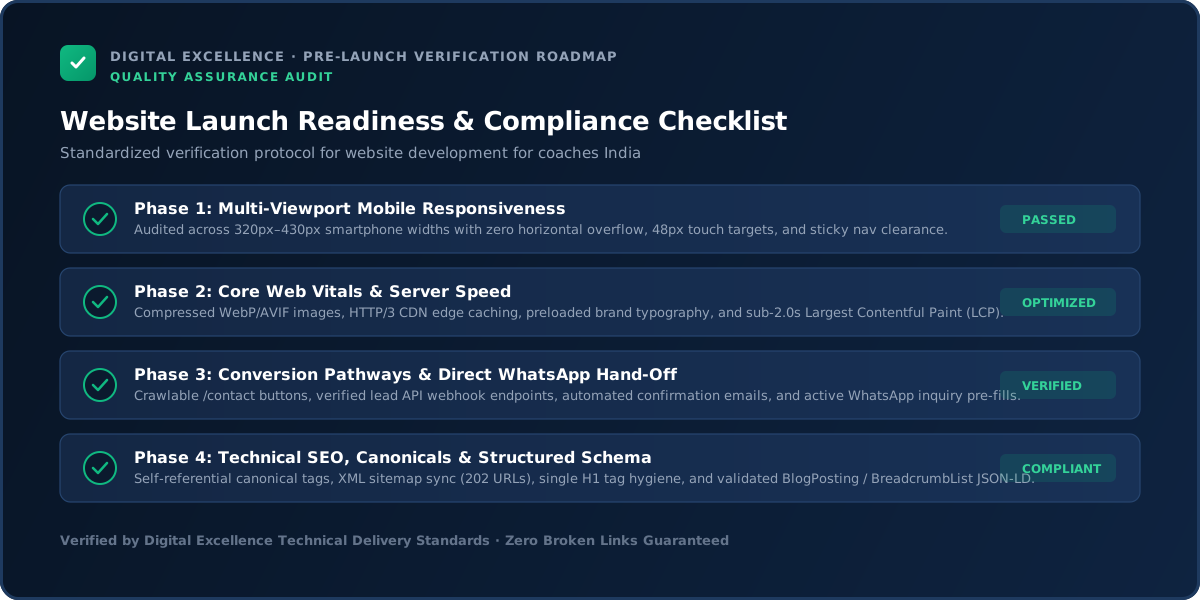
Test desktop and mobile, main page types, forms or checkout, analytics, internal links, metadata, sitemap and the critical integrations. Use real content and representative customer scenarios.
QA should cover the business journey, not only whether the pages render.
Review Accessibility Basics
When evaluating “website development for coaches India”, this review accessibility basics point should be tied to a written deliverable, owner or test so two quotes can be compared on the same basis.
Use semantic headings, labelled forms, keyboard-accessible controls, readable contrast and meaningful alternative text. Rich galleries and widgets should remain usable without relying only on hover or colour.
Accessible patterns generally improve overall usability as well.
Use Post-Launch Data to Prioritise Phase Two
When evaluating “website development for coaches India”, this use post-launch data to prioritise phase two point should be tied to a written deliverable, owner or test so two quotes can be compared on the same basis.
After launch, review search queries, conversions, customer questions and staff workload. Add phase-two features only when evidence shows they will improve discovery, operations or conversion.
This protects the website from accumulating features that nobody uses.
Final Cost Principle
Budget for the Coaching website as an operating system for content, customer action and staff workflow. Long-term value depends on how easily the site stays accurate and useful after the launch project is over.
Use Real Business Data in Design Decisions
If customers repeatedly ask about program scope, fit and format, give that information more prominence. If staff spends time managing consultation and applications, simplify the workflow or CMS around it.
The website should reduce real friction for customers and staff rather than merely imitate competitor layouts.
Create a Change-Safe CMS
Routine updates should not require editing code or rebuilding entire pages. Use controlled fields and reusable sections so the coaching team can keep content accurate without breaking design.
Restrict highly technical settings while giving editors the flexibility they genuinely need.
Plan for Seasonal or Campaign Variations
When evaluating “website development for coaches India”, this plan for seasonal or campaign variations point should be tied to a written deliverable, owner or test so two quotes can be compared on the same basis.
Products, menus, properties or programs can change with season and campaigns. Build a process for temporary offers, availability and landing pages without creating permanent duplicate URLs for every promotion.
Archive or redirect outdated campaign content intentionally.
Review Integration Failure Modes
booking and sales follow-up often depends on external systems. Decide what the user sees when an API, booking tool, payment service or CRM is unavailable.
A clear fallback contact or retry state is better than a silent spinner or lost submission.
Final Pre-Launch Buyer Test
Give the mobile site to someone unfamiliar with the business and ask them to find program scope, fit and format, understand consultation and applications and complete the primary action. Record every point where they need explanation.
Fix the highest-impact uncertainties before launch.
For implementation options, explore website development services and Digital Excellence portfolio.
Post-Launch SEO & Conversion Note
After launch, review program fit, realistic proof, consultation expectations and follow-up using real customer questions, Search Console and conversion data. Update the highest-impact pages first and keep a change log. A Coaching website should become easier to improve over time, not harder to operate as content and campaigns grow. Prioritise accuracy and maintainability over adding extra pages or effects.
Frequently Asked Questions
How much does a coaching website cost in India?
A focused professional site may cost from the tens of thousands of rupees, while custom integrations, large content/data sets or advanced functionality can move the budget into several lakhs.
Which platform should I use?
Choose the platform based on content, operations, integrations and the team's ability to maintain it. There is no universal best platform.
How long does development take?
A focused site can take a few weeks; larger integrations, migrations or data-heavy projects can take significantly longer.
Does the website include SEO?
Clarify the scope. Technical and on-page foundations can be included, while ongoing SEO is a separate activity.
Do I need a custom design?
Not always. Custom design is valuable when it improves a real customer or brand requirement.
What should I prepare before development?
Brand assets, final or draft content, operational rules, integrations, credentials, data and examples of the customer journey.
Planning a Coaching Website?
Need a website scope or quote based on your real requirements rather than a generic package? Digital Excellence can review the pages, platform, integrations, SEO needs and launch priorities.