Business Website Cost in India (2026)

A business website is often the first place a potential customer checks before calling, booking or buying. The cost can range from a simple five-page presence to a much larger lead-generation website with detailed service pages, case studies, integrations and ongoing SEO. This guide focuses specifically on the cost of a normal business or service website in India—not ecommerce stores or software applications.
Table of Contents
- Typical Business Website Cost in India
- What Should a Professional Business Website Include?
- Page Count vs Template Count
- How Design Quality Changes the Cost
- Content and SEO Costs
- Forms, Booking and Business Integrations
- Hosting, Domain and Maintenance
- What to Avoid When Buying a Business Website
- How to Set the Right Budget
- Final Takeaway
- What a Lead-Generation Business Website Needs Beyond Five Pages
- Website Copywriting: DIY, Agency-Written or Collaborative?
- How Photography, Video and Brand Assets Affect Cost
- Analytics, Tracking and Lead Attribution
- Why Mobile Readability Deserves Its Own Budget
- Website Ownership and Handover
- A Practical Business Website Budget Checklist
- Business Website Cost by Industry
- How Long Should a Business Website Last?
- What Should Be Included in a Business Website Proposal?
- One Final Word on Business Website Budgeting
- Before You Approve the Final Quote
- Frequently Asked Questions
Typical Business Website Cost in India
A five-page service website is often used as the benchmark, but page count alone is misleading. Five unique, custom-designed pages require more work than 20 pages built from two reusable templates. A professional business site usually includes responsive design, navigation, service information, contact forms, basic SEO, analytics and an editing system.
A lower-cost site is suitable when the goal is simply credibility and basic enquiries. A larger marketing website may need individual service pages, industries, testimonials, case studies, blog infrastructure, lead magnets and CRM integration.
The budget should match the role the website plays in your sales process.
Business Website Planning Ranges
| Website level | Broad planning range | Typical fit |
|---|---|---|
| Basic credibility site | ₹20,000–₹40,000 | Small local business, simple services |
| Professional lead-generation site | ₹40,000–₹1,00,000 | Growing service business, multiple service pages |
| Advanced corporate/marketing site | ₹1,00,000–₹2,50,000+ | Strong branding, content, integrations, custom UI |
What Should a Professional Business Website Include?
At minimum, visitors should quickly understand who you help, what you offer and what they should do next. Most businesses need a homepage, service pages, an About section, contact information and trust elements such as testimonials or work samples.
The website should work properly on mobile, load reasonably fast and give your team control over important content. It should also have clear forms or consultation pathways rather than forcing visitors to search for contact information.
If organic search matters, each major service should have enough useful content to deserve its own page.
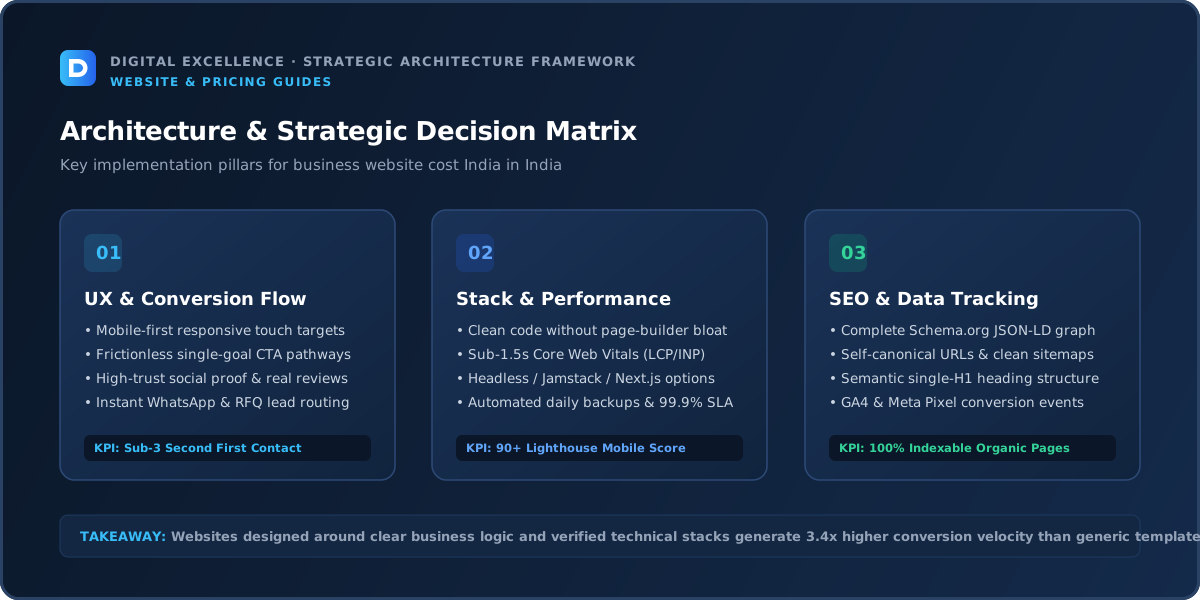
Page Count vs Template Count
Developers often quote by page count because it is simple, but template complexity is a better measure. A 30-location website can use one location template. A five-page luxury brand site can require five completely different layouts.
Ask how many unique page designs are included and which pages reuse the same structure. This makes quote comparisons much clearer.
How Design Quality Changes the Cost
A template-based website is faster and cheaper. Custom design requires research, wireframes or UI planning, brand-specific components and more responsive testing.
If the website supports high-value services, premium brand positioning or paid advertising, stronger design can be commercially useful. If the goal is only to create a credible online presence, a simpler design system may be enough.
Do not confuse decorative animation with good design. Clear hierarchy, spacing, typography and mobile usability matter more.
Content and SEO Costs
Many website quotations assume the client will provide final text. If you need the agency to research services, structure pages, write copy and optimise metadata, that should be part of the scope.
SEO-ready development includes clean URLs, headings, titles, descriptions, internal links, image optimisation, sitemap, canonicals and crawlable navigation. It does not guarantee top rankings; competitive SEO requires ongoing content and authority work.
For a related buying decision, see Website Development Cost in India : Complete Pricing Guide.
Forms, Booking and Business Integrations
A simple contact form is inexpensive. Booking calendars, CRM connections, WhatsApp automation, quotation calculators, payment links or member areas add complexity.
List the systems your business already uses before development begins. Integrating them early is usually easier than adding them after launch.
Hosting, Domain and Maintenance
Ask whether hosting and domain are included and for how long. Also define maintenance. Does it mean uptime monitoring only, or does it include content changes and bug fixes?
A business website is not a one-time asset that never changes. Services, offers, team members and content evolve. Budget for a practical support model.
What to Avoid When Buying a Business Website
Avoid choosing only by the lowest quote. Avoid giving up control of the domain. Avoid websites that are impossible to edit without the original developer. Avoid excessive plugins or animations that slow the site down.
Most importantly, avoid buying features you cannot explain. A website should support a business goal, not become a technology showcase.
How to Set the Right Budget
Start with the value of a lead or sale. If one new client is worth ₹50,000, investing more in a strong website may be rational. If the business only needs a digital brochure, keep the scope lean.
Define must-have pages, content responsibilities, integrations and post-launch support. Then compare proposals on the same scope rather than asking every vendor for a generic “website price.”
Final Takeaway
Business website cost in India should be based on the role the site plays in your business. A lean website can be an excellent investment when requirements are simple. A larger lead-generation website deserves more budget when it must support search, advertising and sales. Define the job first, then buy the right level of website.
What a Lead-Generation Business Website Needs Beyond Five Pages
Businesses that depend on enquiries often need more than Home, About, Services and Contact. A visitor may want to see individual service details, industries served, case studies, testimonials, pricing guidance, FAQs and a clear next step. Creating those assets increases cost, but it also gives the website more opportunities to answer questions before a sales call.
A service page should not exist only because an SEO checklist says so. It should explain the problem, approach, proof and next step for a specific service. When several services are forced onto one short page, both users and search engines have less context.
For a business that expects organic search or paid ads to produce leads, information architecture deserves budget just like visual design.
For a useful scope comparison, read 20 Questions to Ask Before Hiring a Website Developer.
Website Copywriting: DIY, Agency-Written or Collaborative?
Copy can significantly affect cost and project speed. If the business supplies polished final copy, the developer only needs to implement it. If the agency must interview stakeholders, research competitors, define positioning and write every page, content becomes a separate workstream.
DIY copy saves money but can delay launch when internal teams struggle to finish it. Agency-written copy can create a more consistent voice, but the business still needs to provide facts, proof and approvals. A collaborative approach often works well: the business supplies raw information and the agency structures and edits it.
Ask whether content is included before comparing quotes. Two identical-looking prices may cover very different responsibilities.
How Photography, Video and Brand Assets Affect Cost
Websites look more credible when they use real brand assets. Professional photography, team portraits, product images, office photography, video and custom illustrations are separate creative costs in many projects.
Stock imagery can be useful, but relying on generic stock for a trust-based service business can make the site feel interchangeable. If you already have strong assets, organise them before design begins. If you need a shoot, plan it early so placeholders do not dictate the final layout.
Logo quality and brand guidelines matter too. A website project sometimes exposes that the business does not yet have a consistent visual identity. Rebranding is a different scope and should not be quietly bundled into website development.
A practical way to set a business-website budget is to connect the site to lead value. If the website mainly confirms credibility for referral customers, a focused and maintainable scope may be enough. If one qualified enquiry can be worth a meaningful amount and the site will support SEO or paid campaigns, deeper service pages, proof, analytics and conversion work can justify a larger investment.
Use that commercial role to prioritise scope. Protect the pages and tracking that support the primary customer action first, then add lower-priority brand or animation ideas in phase two.
Analytics, Tracking and Lead Attribution
A business website should make it possible to understand what generates enquiries. Basic analytics can show traffic and page behaviour, while advertising platforms may require additional tags or conversion events.
If calls, WhatsApp messages, forms and bookings are important, decide how each action will be tracked. CRM integration can help connect website leads to sales outcomes. More advanced tracking requires additional setup and testing, but it becomes valuable when the business spends meaningfully on marketing.
Ask the developer what analytics are included and who will verify that conversions fire correctly after launch.
Why Mobile Readability Deserves Its Own Budget
Many business owners review websites on a laptop even though potential customers often arrive on mobile. Long headings, oversized cards, cramped forms and floating buttons can make a polished desktop page frustrating on a phone.
Good mobile implementation may require changing content order, simplifying navigation, adjusting typography and redesigning tables or comparison sections. It is not enough for the page to technically shrink to a smaller width.
When choosing a developer, open several portfolio projects on your phone. Mobile quality is one of the easiest ways to separate thoughtful implementation from template assembly.
Website Ownership and Handover
Before launch, clarify who owns the domain, hosting account, source code, CMS admin and third-party services. Your business should not lose access to its website because a freelancer becomes unavailable.
A proper handover should include credentials or invitations, basic documentation and clarity around backups and future maintenance. If custom code is involved, ask where the repository is stored and whether your company has access.
Ownership is not an exciting design feature, but it can save significant cost and disruption later.
For the next planning step, use Small Business Website Cost in India.
A Practical Business Website Budget Checklist
Define the primary goal, ideal customer, services, required pages, forms, integrations, content responsibilities and ongoing support. Decide whether SEO is part of the launch or a later phase. Gather your logo, brand assets, testimonials and case studies.
Then ask vendors to quote the same brief. Compare unique templates, mobile design, CMS, SEO setup, analytics, revisions, hosting and maintenance. This creates an apples-to-apples comparison and helps you spend on the parts of the website that actually support the business.
Business Website Cost by Industry
A law firm, real-estate consultant, salon, B2B manufacturer and coaching business may all need a “business website,” but the buying journey is different. Professional services often need authority-building content and consultation forms. Real estate may require property listings or CRM integration. Salons may need booking. B2B companies may need detailed capability pages, downloadable brochures and enquiry qualification.
Industry requirements affect both content and functionality. Instead of copying a generic five-page structure, map what a potential customer needs to see before contacting the business.
How Long Should a Business Website Last?
A well-built website should not need a complete redesign every year. However, content, technology and the business itself change. Many companies refresh messaging and sections regularly and consider a larger redesign after several years when positioning, branding or user expectations have shifted.
The better the underlying structure, the easier it is to evolve without rebuilding everything. Reusable components, clean content management and documented integrations reduce long-term ownership cost. When comparing quotes, think beyond launch and ask how easy the site will be to update two years later.
What Should Be Included in a Business Website Proposal?
A useful proposal should state the pages or templates, design approach, CMS, forms, integrations, content responsibilities, SEO setup, analytics, hosting, maintenance, revision process and launch support. It should also identify anything excluded from the price.
Ask for ownership details and recurring software costs in writing. This turns a vague “website package” into a scope you can actually compare. It also reduces disputes when a new request appears during development.
One Final Word on Business Website Budgeting
A business website should be judged against the value it is expected to create. For a small local company, a compact and trustworthy site can be enough. For a company using the website as a primary lead-generation channel, stronger service pages, proof, analytics and conversion paths justify a higher budget. Match the investment to the sales role of the website rather than copying another company's scope.
Before You Approve the Final Quote
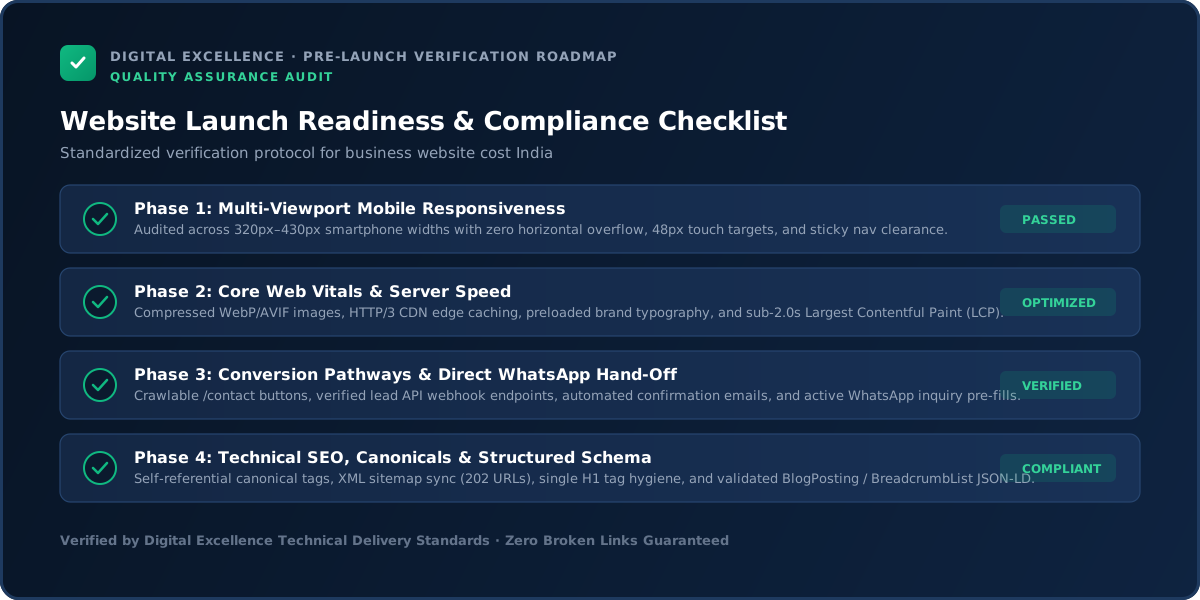
Before approving the project, confirm the final scope, recurring costs, ownership, delivery timeline and who will provide content. A short written checklist at this stage can prevent expensive misunderstandings later and gives both the business and the developer a shared definition of what a successful launch includes.
For implementation options, explore website development services and Digital Excellence portfolio.
Frequently Asked Questions
How much does a small business website cost in India?
A straightforward professional small-business site often falls in the tens of thousands of rupees. More pages, custom design, content, SEO and integrations increase the cost.
How many pages does a business website need?
There is no ideal number. Create pages for important services and information users genuinely need. Avoid adding pages simply to increase page count.
Should I pay separately for SEO?
Basic technical and on-page setup may be part of development. Ongoing SEO usually requires separate content, optimisation and authority work.
Can I update the website myself?
If the website uses a CMS or well-designed admin system, routine content should be editable. Confirm this before development.
Do I need custom development?
Most standard business websites do not. Custom development is useful when you need unusual functionality or deeper integrations.
Planning a Business Website?
Need a website scope or quote based on your real requirements rather than a generic package? Digital Excellence can review the pages, platform, integrations, SEO needs and launch priorities.