Shopify Website Development Cost in India (2026)

Shopify can make launching an online store faster because the platform already handles hosting, checkout, core security and much of the commerce infrastructure. But the cost of a serious Shopify website still varies widely. A basic theme setup with a small catalogue is very different from a custom branded store with unique sections, advanced filters, subscriptions, migration work and multiple apps. This guide explains where the money actually goes so Indian businesses can budget for Shopify without underestimating recurring costs.
Table of Contents
- Typical Shopify Website Development Cost in India
- What Shopify Itself Charges
- Theme Cost vs Custom Design
- Product and Catalogue Setup
- Shopify Apps and Recurring Costs
- Custom Shopify Development
- Migration to Shopify
- SEO and Speed Optimisation
- Maintenance and Support
- How to Choose the Right Shopify Budget
- Final Takeaway
- Shopify Costs by Business Stage
- What Should Be Included in a Professional Shopify Quote?
- Shopify Mobile UX: Where Development Quality Shows
- How Shopify Development Cost Connects to Conversion
- A Practical Shopify Budget Checklist
- Questions to Ask Before You Hire a Shopify Developer
- Frequently Asked Questions
Typical Shopify Website Development Cost in India
Shopify pricing has two layers: the platform subscription and the work required to create the storefront. The platform fee gives you access to the commerce system, but it does not design your brand, structure collections, prepare product pages or integrate your business tools.
A lower-cost project usually uses a proven theme, a small number of products and standard Shopify features. A mid-range project often includes a customised theme, improved product templates, collection architecture, better mobile UX, apps, analytics and SEO foundations. Higher-end projects may include extensive Liquid development, custom sections, headless components, subscriptions, B2B logic, migrations and API integrations.
The useful way to compare Shopify quotes is to separate platform cost, one-time build cost and recurring app/support cost.
Shopify Budget Bands
| Project type | Broad planning range | Typical scope |
|---|---|---|
| Starter Shopify store | ₹30,000–₹70,000 | Theme setup, small catalogue, standard features |
| Professional branded store | ₹70,000–₹2,00,000 | Customised theme, stronger UX, apps, SEO setup |
| Advanced Shopify build | ₹2,00,000–₹5,00,000+ | Custom sections, migrations, advanced integrations |
| Headless/custom Shopify architecture | ₹4,00,000+ | Custom frontend, complex commerce requirements |
What Shopify Itself Charges
Shopify charges a recurring subscription for the platform. Plan names and prices can change, so do not rely on old screenshots or blog posts when budgeting. Check Shopify's official India pricing page for the current monthly or annual rate before signing a development proposal.
The subscription covers the hosted commerce platform, but businesses may also pay for paid themes, premium apps and transaction-related costs depending on payment setup. These platform costs are separate from the developer or agency fee.
For budgeting, create two lines: one for Shopify software and apps, and another for design, development, migration and support.
Theme Cost vs Custom Design
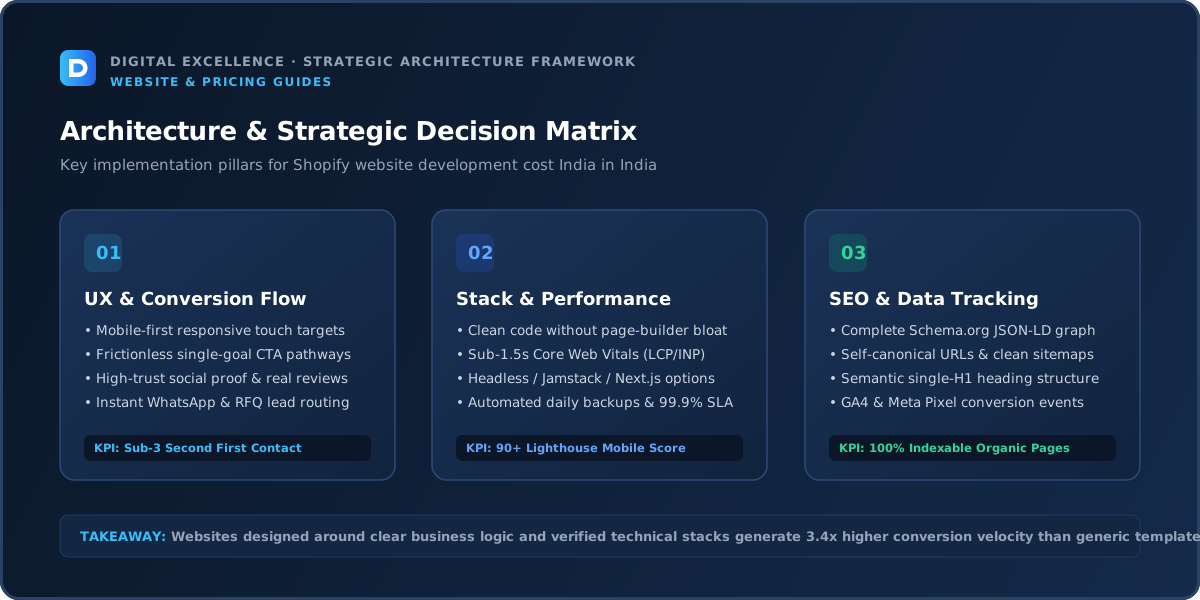
A free or paid Shopify theme can reduce development time because common ecommerce patterns are already built. That is often the smartest route for a small or medium store with standard requirements.
Custom design increases cost because the developer must create unique sections, component behaviour and responsive states while preserving Shopify's editing experience. If brand identity is important, customising a strong theme can provide a useful middle ground between a generic setup and a completely bespoke storefront.
Do not pay for custom code simply to change colours and fonts. Pay for customisation when it improves merchandising, storytelling, mobile usability or an actual business requirement.
Product and Catalogue Setup
Catalogue work can become a major cost driver. Products need titles, images, variants, SKUs, prices, collections and sometimes metafields. A fashion store may require size and colour variants; a beauty store may need ingredients and usage information; a jewellery store may require material and sizing details.
If you already have clean product data, importing can be fast. If the development team must fix duplicate data, rename images, structure collections and create product descriptions, the project takes longer.
Before requesting a quote, state how many products and variants you have and whether the product data is ready.
Shopify Apps and Recurring Costs
Apps can add reviews, subscriptions, loyalty, bundles, advanced filters, email marketing, WhatsApp, shipping and many other features. They are useful, but stacking too many apps can increase monthly cost and sometimes affect performance.
A good Shopify build should use native features where practical and add apps only when there is a clear requirement. Ask for a list of all paid apps before launch and calculate the expected annual software cost.
Recurring app fees are often the difference between a cheap-looking proposal and the real cost of operating the store.
For a related buying decision, see Ecommerce Website Development Cost in India : Full Guide.
Custom Shopify Development
Custom Shopify work usually means Liquid theme development, custom sections, metafields, app integrations or custom applications. It becomes valuable when standard theme controls cannot deliver the desired experience.
Examples include advanced product configurators, custom bundle logic, unusual subscription flows, B2B pricing or integrations with external business systems. The more custom logic you introduce, the more testing and maintenance responsibility you create.
If the requirement can be solved cleanly with native Shopify features, that is often the more maintainable choice.
Migration to Shopify
Moving from WooCommerce, Magento or another platform adds cost because data and SEO have to be protected. Migration can include products, customers, orders, collections, blog content and redirects.
SEO migration matters because old URLs may already have backlinks and search visibility. A redesign that deletes all old URLs without mapping them can lose valuable traffic.
Ask whether the migration quote includes redirects, metadata transfer, product images, customer history and testing—not only product CSV import.
SEO and Speed Optimisation
Shopify provides a strong technical base, but your store still needs unique titles, descriptions, useful collection pages, internal links, image optimisation and sensible app usage. Search performance depends on content, competition, authority and technical execution—not the platform name alone.
Speed optimisation often involves reducing oversized images, reviewing third-party scripts, limiting unnecessary apps and keeping custom code efficient. Mobile performance deserves special attention because social and paid traffic frequently arrives on phones.
Maintenance and Support
Shopify handles core infrastructure updates, but the storefront still changes. Themes, apps, products, promotions and tracking setups can create issues. Maintenance may include app checks, theme updates, bug fixes, speed reviews and new content.
Clarify what post-launch support is included. A store that drives daily revenue should have a defined route for urgent fixes and ongoing improvements.
For a useful scope comparison, read Shopify vs WooCommerce India : Which Is Better for Your Business?.
How to Choose the Right Shopify Budget
Start with the catalogue, acquisition channels and must-have workflows. A small brand validating demand should avoid building a complex custom system. A growing brand spending heavily on ads may benefit from stronger product-page UX, analytics and performance work.
Choose the lowest level of customisation that still supports your brand and operations. That usually gives the best balance between launch speed, cost and maintainability.
Shopify cost planning should distinguish the platform subscription from development and app costs. The right plan can change as staff, markets, reporting or API requirements grow, so verify Shopify's live India pricing at the time the store is implemented rather than relying on an old screenshot or article.
Also review how much of the desired functionality can be handled by Shopify's native features before adding paid apps. Every app can add recurring cost, scripts and a new vendor dependency. A disciplined app stack often produces a store that is easier to maintain than a heavily customised theme with overlapping tools.
Final Takeaway
Shopify website development cost in India is best viewed as platform subscription plus design and development plus ongoing apps and support. A small store may only need a clean theme implementation, while a serious growth-stage brand may justify custom UX and integrations.
The most cost-effective Shopify build is the one that solves today's requirements cleanly without creating unnecessary monthly software or custom-code complexity.
For implementation options, explore website development services and Digital Excellence portfolio.
Shopify Costs by Business Stage
The right Shopify budget changes with the stage of the business. A new brand validating demand usually needs a clean storefront, reliable checkout, a small set of collections and basic analytics. Spending heavily on custom interactions before you know which products and campaigns work can delay launch without improving the buying experience.
A growth-stage brand has different needs. Paid acquisition, repeat customers and a larger catalogue can justify better filtering, stronger product storytelling, bundles, reviews, email capture and deeper analytics. At this stage, design decisions start affecting merchandising efficiency and conversion, so a more customised theme can make sense.
An established retailer may need migration planning, multiple markets, B2B workflows, ERP connections or custom applications. That is where Shopify development can become a software project rather than a theme project. Matching the build to the stage of the business keeps capital focused on requirements that already exist.
What Should Be Included in a Professional Shopify Quote?
A useful Shopify quotation should clearly state the theme approach, number of unique templates, product and collection setup, mobile optimisation, app configuration, payment and shipping setup, analytics, SEO foundations, testing, migration and support. If product uploads are limited, the limit should be written down.
The quote should also separate one-time and recurring costs. Paid themes, Shopify subscriptions, apps and external services should not be hidden inside a vague development fee. You should know which accounts will belong to your business and which subscriptions must be renewed.
Ask how revisions work, who owns custom code, whether a staging or preview process is used, and what happens after launch. A transparent scope prevents the common problem where the cheapest proposal becomes expensive through add-ons.
Shopify Mobile UX: Where Development Quality Shows
A large share of ecommerce traffic arrives on mobile, especially for brands that advertise on Instagram, Meta or short-form video platforms. A Shopify store can look polished on desktop and still lose customers because menus are difficult to use, product galleries are heavy, variant selectors are cramped or sticky elements cover important information.
Mobile optimisation is therefore more than responsive CSS. Developers should test collection browsing, search, filters, product media, variant selection, add-to-cart, cart editing and checkout handoff on real screen sizes. Content should remain readable without requiring constant zooming or excessive scrolling.
When comparing quotes, ask whether mobile layouts are intentionally designed or simply inherited from the desktop theme. The difference is often visible in the final shopping experience.
For the next planning step, use Shopify Developer Cost in India.
How Shopify Development Cost Connects to Conversion
It is tempting to evaluate Shopify development only by launch price, but the store sits directly in the revenue path. Better product information, faster pages, clearer navigation and fewer checkout distractions can improve the quality of traffic you already pay for.
That does not mean every expensive redesign will increase sales. Conversion depends on product-market fit, pricing, offers, traffic quality and trust as well as design. The website's job is to remove avoidable friction and present the brand clearly.
Spend on custom development when you can connect the work to a customer problem: people cannot find products, mobile pages are slow, bundles are hard to understand, important information is missing, or the existing backend makes campaigns difficult to operate. That is a stronger justification than copying features from a famous store.
A Practical Shopify Budget Checklist
Before asking for a quote, write down the number of products and variants, required collections, countries you will sell to, payment methods, shipping rules, apps you already use, integrations, content readiness and whether migration is required. Also identify your primary traffic sources and the actions you need to track.
Separate must-have launch features from phase-two ideas. Confirm which team member will provide product data, images, policies and brand assets. Decide whether you want the agency to manage ongoing updates or hand over the store after launch.
This checklist makes estimates more accurate and prevents you from paying for assumptions. It also allows multiple developers to quote against the same brief, making comparisons fairer.
Questions to Ask Before You Hire a Shopify Developer
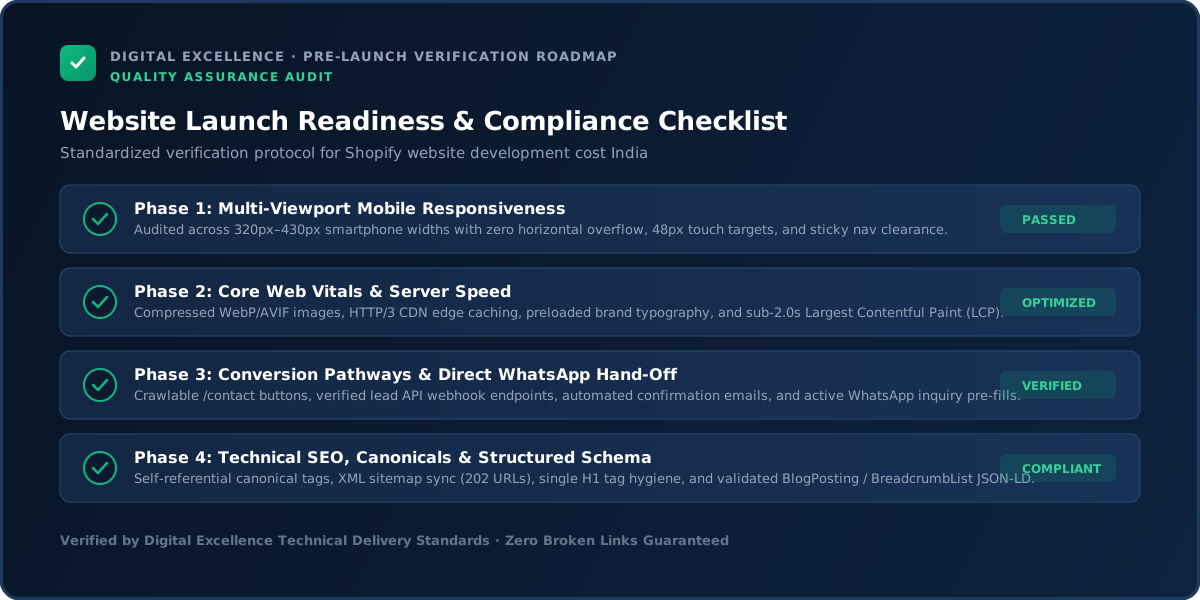
Ask which parts of the store will use native Shopify features, which will use apps and which require custom code. Ask who will create collections, product templates and metafields, and how many products are included in setup. Confirm who owns theme files, app accounts and tracking accounts.
Also ask how the developer handles testing, migration redirects, mobile optimisation and launch support. Clear answers make it easier to distinguish a thoughtful implementation from a quick theme setup.
Frequently Asked Questions
How much does a Shopify website cost in India?
A simple Shopify setup may cost tens of thousands of rupees, while a professionally customised store can move into the low lakhs and advanced custom builds can cost several lakhs. The catalogue, theme, apps, integrations and migration requirements determine the final quote.
Is Shopify's monthly fee included in development cost?
Usually no. The Shopify subscription is paid to Shopify and development fees are paid separately to the developer or agency.
Do I need a paid Shopify theme?
Not always. Free themes can be enough for many stores. Paid themes may provide additional layouts or features, but the right choice depends on the brand and catalogue.
Can Shopify be customised heavily?
Yes. Shopify themes can be customised with Liquid, sections, metafields and apps, and advanced projects can use custom applications or headless frontends.
Does Shopify work well for SEO?
Shopify can rank well when content, site structure, internal links, metadata, performance and authority are handled properly. The platform does not guarantee rankings on its own.
Planning a Shopify Store?
Need a website scope or quote based on your real requirements rather than a generic package? Digital Excellence can review the pages, platform, integrations, SEO needs and launch priorities.